

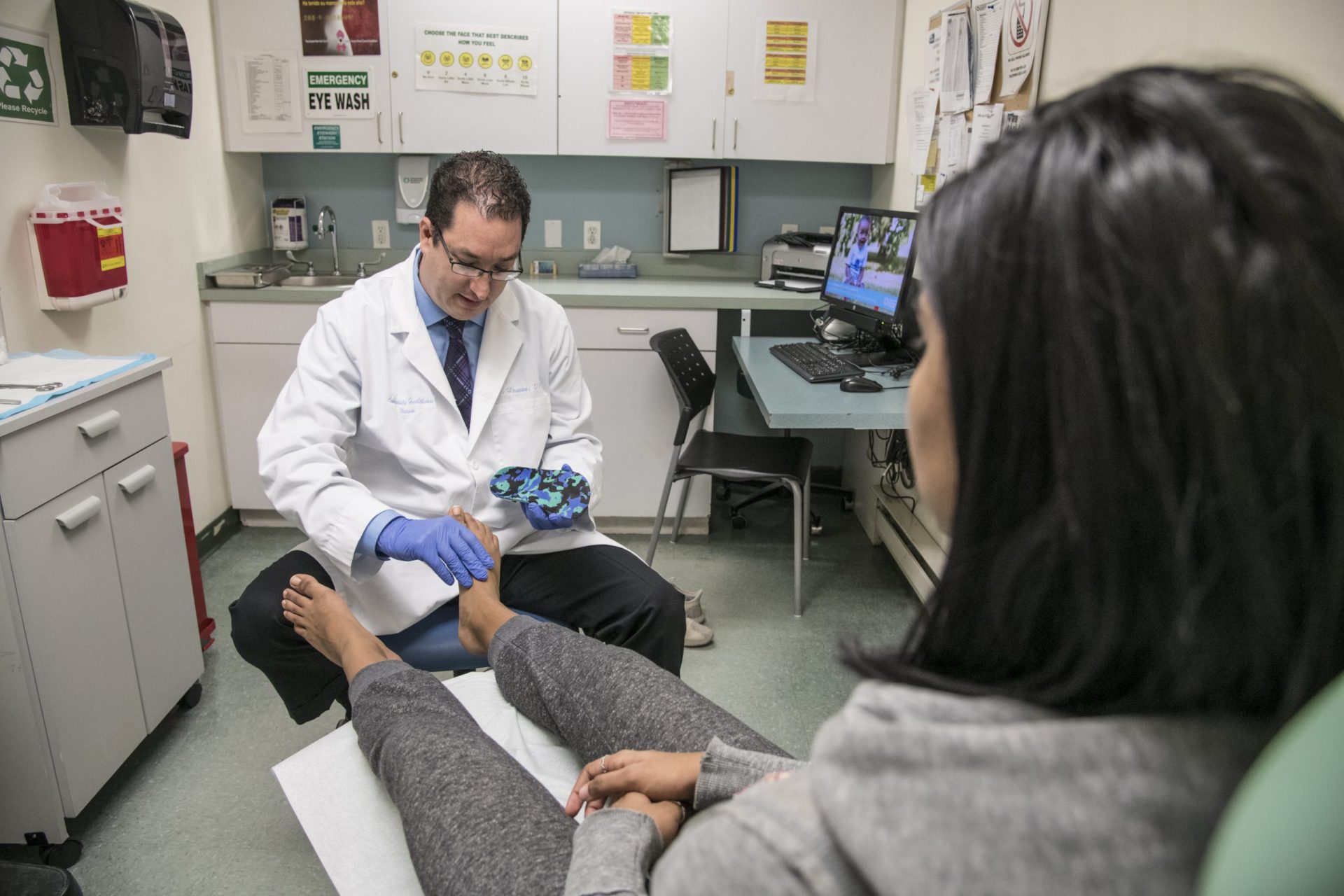
Affordable foot care in NYC is essential for staying mobile, independent, and healthy, yet many people delay treatment until pain or complications become impossible to ignore. For older adults and people living with diabetes in particular, untreated foot problems can lead to infections, balance issues, and serious health risks that go far beyond discomfort.
This article explains why foot health matters more than most people realize and how timely podiatry care can prevent long-term problems. We will cover common foot conditions, explain why early treatment is especially important for people with diabetes, and show where to find care that is both accessible and affordable.
At Community Healthcare Network, compassionate podiatry services are available at health centers across the city, helping patients get the care they need without delaying treatment because of cost or access barriers. To understand why foot care should not be put off, it helps to start with why healthy feet play such a critical role in overall health.
Table of Contents
- Key Takeaways
- Why Foot Health Matters More Than You Think
- Common Foot Problems That Should Not Be Ignored
- Affordable Foot Care at Community Healthcare Network
- Foot Care Services at CHN
- Foot Care for People with Diabetes and Older Adults
- Where to Get Foot Care at CHN in NYC
- Conclusion: Taking Care of Your Feet Supports Your Whole Health
- Frequently Asked Questions
Key Takeaways
- Affordable foot care in NYC is essential for mobility and overall health, especially for older adults and people with diabetes.
- Many common foot problems can worsen if left untreated, but early podiatry care helps prevent infections, chronic pain, and mobility issues.
- Community Healthcare Network offers compassionate, affordable podiatry services at all locations, making care accessible across NYC.
- CHN treats a wide range of foot conditions, including diabetic foot issues, heel pain, non-surgical care of bunions and hammertoes, infections, skin conditions of the feet and sports-related injuries.
- Regular foot care supports independence and long-term health, helping patients stay active and avoid more serious complications over time.
Why Foot Health Matters More Than You Think
Your feet support your entire body every time you stand, walk, or move through the day. When foot problems go untreated, they can affect balance, posture, and overall mobility, making everyday tasks harder and increasing the risk of falls and injury.
Foot health is especially important for:
- Older adults, who may experience reduced circulation, balance issues, or slower healing
- People with diabetes, who are at higher risk for nerve damage, infections, and foot ulcers
According to the Centers for Disease Control and Prevention, diabetes-related foot complications are a leading cause of hospitalizations that could often be prevented with regular foot care and early treatment. The American Podiatric Medical Association also emphasizes that many serious foot conditions begin with minor issues that worsen when ignored.
Paying attention to foot health helps:
- Prevent infections and chronic pain
- Protect mobility and independence
- Reduce the risk of serious complications over time
Understanding why foot care matters makes it easier to recognize when it is time to seek professional help rather than trying to manage pain on your own.
Common Foot Problems That Should Not Be Ignored
Many people live with foot pain or discomfort longer than they should, assuming it is normal or will go away on its own. In reality, small foot problems can worsen over time and lead to infection, limited mobility, or ongoing pain if left untreated.
Some of the most common foot issues treated by podiatry clinicians include:
- Ingrown toenails, which can become infected and painful
- Heel pain and plantar fasciitis, often caused by overuse or poor support
- Bunions and hammertoes, which can worsen without proper care
- Athlete’s foot and fungal infections, which rarely clear up without treatment
- Sprained or twisted ankles, especially after falls or sports activity
For people with diabetes, even minor foot issues can become serious more quickly due to reduced circulation or nerve damage. Early evaluation helps prevent complications and keeps small problems from turning into larger health concerns.
If foot pain, swelling, numbness, or skin changes are affecting how you walk or stand, it is a sign that professional foot care can help.
Affordable Foot Care at Community Healthcare Network
Getting professional foot care should not feel out of reach. At Community Healthcare Network, podiatry services are designed to be accessible, affordable, and centered on patient comfort, so people do not delay care because of cost or uncertainty.
CHN’s podiatry team provides thorough, compassionate care for everyday foot concerns and more complex conditions. Services are available at most CHN locations, making it easier to get care close to home rather than traveling across the city.
Patients choose CHN for foot care because:
- Care is available for adults, children, and older adults
- Clinicians focus on nonsurgical treatment whenever possible
- Support is available for ongoing conditions like diabetes or chronic foot pain
- Visits are focused on relief, prevention, and long-term mobility
Whether you are dealing with persistent discomfort or a new foot issue, affordable podiatry care can help you stay active and avoid more serious problems down the line.
Foot Care Services Available at CHN
CHN podiatry clinicians treat a wide range of foot and ankle concerns, focusing on early care, pain relief, and prevention. Many conditions respond well to timely, nonsurgical treatment, which helps patients stay active and avoid complications.
Common services include:
- Diabetic foot care, including evaluation of circulation, nerve changes, and skin integrity
- Ingrown toenails and nail conditions
- Heel pain and plantar fasciitis
- Bunions and hammertoes with nonsurgical management
- Athlete’s foot and fungal infections
- Plantar warts and papillomas
- Sprained or twisted ankles
- Pediatric (children’s) foot problems
- Sports-related foot and ankle issues
- Answers to general foot health questions
Some patients may also qualify for special shoes, inserts, braces, or orthotics to improve support, reduce pain, and prevent repeat injuries.
How early care helps
Condition | What podiatry does | Why it matters |
Heel pain | Diagnose cause, guide treatment | Prevents chronic pain |
Ingrown toenails | Safe removal, infection care | Avoids infection |
Diabetic foot issues | Regular exams, prevention | Reduces ulcer risk |
Bunions/hammertoes | Nonsurgical relief options | Preserves mobility |
Early treatment keeps small problems from becoming big ones and supports long-term foot health.
Foot Care for People With Diabetes and Older Adults
Foot care is especially important for people with diabetes and older adults, because circulation changes, nerve damage, and slower healing can turn minor issues into serious complications.
For people with diabetes, regular foot care helps:
- Detect loss of sensation or nerve damage early
- Prevent skin breakdown, ulcers, and infections
- Reduce the risk of hospitalizations and amputations with routine monitoring
Older adults also benefit from consistent podiatry care. Age-related changes can affect balance, joint mobility, and foot structure, increasing the risk of falls and chronic pain. Addressing concerns early helps maintain independence and mobility.
CHN podiatry clinicians focus on prevention as much as treatment. Visits often include:
- Careful foot exams and skin checks
- Guidance on daily foot care and footwear
- Ongoing monitoring for patients with chronic conditions
Regular foot care is not just about comfort. For many patients, it is a key part of staying active, safe, and healthy.
Where to Get Foot Care in NYC
Affordable foot care is available at most Community Healthcare Network locations, making it easier to get podiatry services close to home. CHN’s podiatry teams provide consistent care across the city, so patients do not have to travel far or delay treatment.
Foot care services are offered at:
- CHN South Bronx
- CHN Long Island City
- CHN Sutphin Blvd.
- CHN Jamaica
- CHN Washington Heights
- CHN Lower East Side
- CHN Harlem
- CHN Crown Heights
- CHN Williamsburg
- CHN Tremont
- CHN East New York
With podiatry services available citywide, patients can access routine and specialized foot care without long wait times or unnecessary travel.
Conclusion: Taking Care of Your Feet Spports Your Whole Health
Foot health plays a bigger role in daily life than many people realize. Pain, infections, or untreated foot conditions can limit mobility, increase fall risk, and lead to serious complications, especially for older adults and people living with diabetes. Access to affordable foot care in NYC helps prevent small issues from becoming long-term health problems.
At Community Healthcare Network, podiatry care is designed to be accessible, compassionate, and focused on prevention as well as treatment. With foot care services available at most CHN locations, patients can get timely support close to home without delaying care due to cost or access concerns.
Protect your mobility and take an important step toward better overall health.
Frequently Asked Questions
What foot care services does Community Healthcare Network offer?
Community Healthcare Network provides podiatry care for ingrown toenails, diabetic foot issues, heel pain, non-surgical treatment of bunions and hammertoes, fungal infections, sports injuries, pediatric foot problems, and many more.
Is foot care affordable at CHN if I have limited insurance?
Yes. CHN offers affordable foot care options and accepts Medicaid and many insurance plans, helping patients access care without delaying treatment due to cost.
Why is foot care especially important for people with diabetes?
Diabetes can reduce sensation and circulation in the feet, making it harder to notice injuries. Regular foot care helps prevent infections, ulcers, and serious complications.
Do I need a referral to see a podiatrist at CHN?
In many cases, a referral is not required, but this can depend on your insurance plan. CHN staff can help you understand what is needed before your visit.
Where can I get foot care services through CHN in NYC?
Foot care services are available at most CHN locations across NYC, making it easier to find podiatry care close to home.