Your feet carry you an average of 115,000 miles in your lifetime, so keeping them healthy should be a priority!
Choosing the Right Shoes
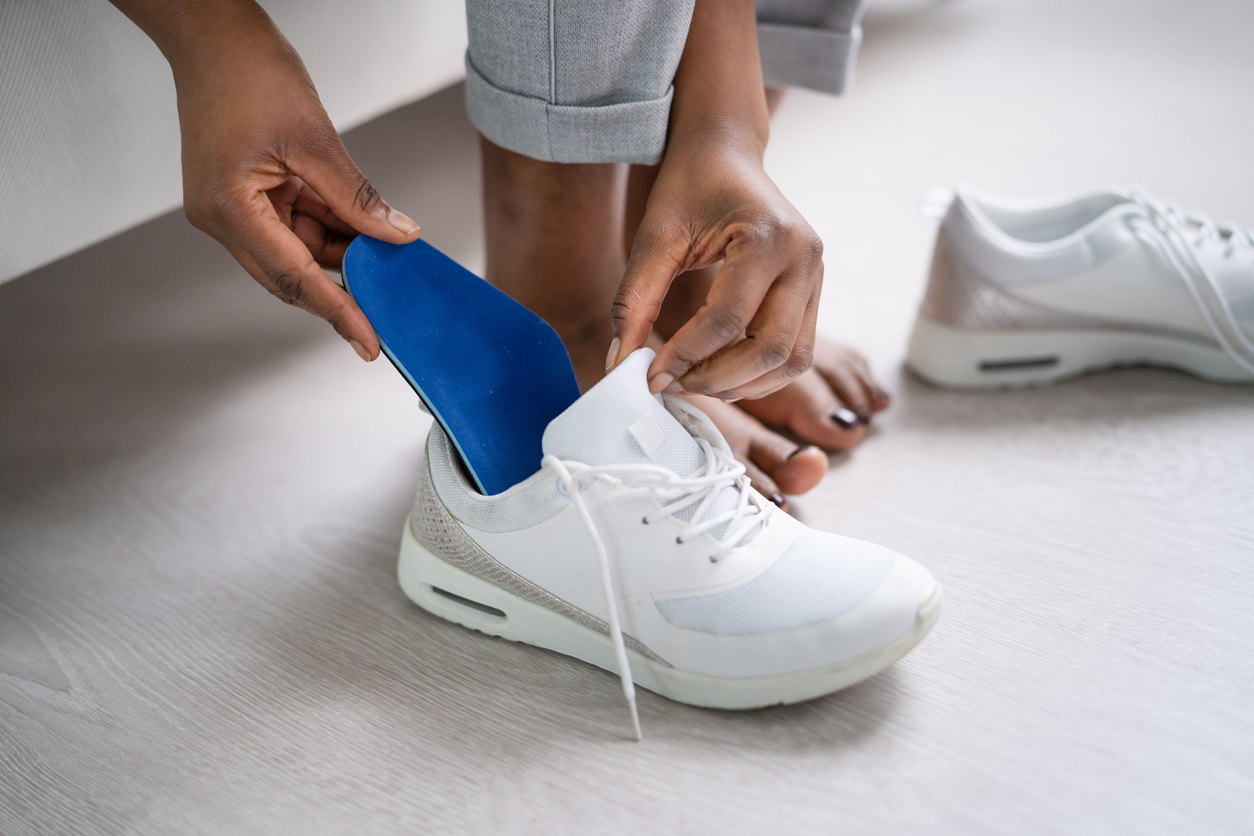
The right shoe depends on what you do most often. Comfort is a good sign that a shoe fits well, but it is not the only thing to think about. Insoles are not just for people who already have foot problems. They can also help prevent pain and support healthy feet.
Shoe Fitting Tips
Fit comes first. Shoes should have the right length and width, with enough room in the toe box. Leave about a thumb width of space in front of your toes
Choose shoes based on your arch type:
- Low arch or flat feet: Choose stability or motion control shoes.
- Neutral arch: Look for neutral cushioning shoes.
- High arch: Select cushioned, flexible shoes for better shock absorption.
When Insoles May Help
Insoles help when:
- Experiencing pain (heel, arch, forefoot)
- Dealing with structural issues (flat feet, high arches)
- Standing or engaging in activity for long durations

What Insoles Should I Wear?
Walking:
Lightweight, cushioned shoes with mild arch support. Shock-absorbing insoles help with comfort and early plantar fasciitis or knee pain.
Running:
Activity-specific shoes with good cushioning and stability. Use lightweight insoles. Poor footwear can contribute to shin splints.
Standing All Day:
Cushioned, supportive shoes. Contoured insoles reduce fatigue and help prevent pain.
Hiking:
Sturdy shoes/boots with traction and ankle support; firm, moisture-wicking insoles. Focus on stability over softness.
Court/Field Sports:
Shoes with strong lateral support and grip. Thin, supportive insoles help prevent ankle and forefoot injuries.
Cycling:
Very stiff-soled shoes. Insoles with metatarsal support reduce forefoot numbness.
Weightlifting:
Flat, stable shoes with minimal cushioning. Thin, firm insoles improve balance and force transfer.
Cold Weather:
Insulated, waterproof footwear. Thermal insoles for warmth and dryness.
If you are having foot pain or are unsure which shoes or insoles are right for you, schedule an appointment with a podiatrist for personalized care.